

SAB Voices: Francesca Barone on Bringing an Entrepreneurial Mindset to Immunology
Home - Governance & Expertise - Communiqué de presse - Lancement MIB
Marseille, 4 May 2026 –
The first time Francesca Barone sat in a Boston café and overheard people around her discussing flow cytometry and the latest scientific discoveries, she felt she was exactly where she was meant to be.
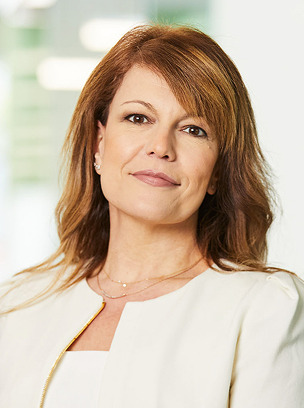
“I am a nerd at heart, so if I can do research and learn new things, this is the place I want to be. ”
Francesca Barone
Barone, who initially trained as a physician-scientist and rheumatologist, fell in love with the immune system as a student in her native Italy.
“My contact with immunology and passion for immunology started very early during my studies,” she said. “I got totally fascinated by the immune system.”
At the time, researchers were beginning to understand how cells, cytokines and chemokines interact, and Barone could see that these insights could translate directly into therapies. It was a discipline where discovery and application were beginning to converge. That reinforced her conviction that scientific insight matters most when it can be translated into treatments lives.
She went on to build her career across clinical practice and academia in the UK, treating patients with autoimmune diseases while leading translational research.
But over time, she became increasingly aware of the limits of the academic system when it came to bringing discoveries to patients. In 2019, she moved to biotech in Boston, looking for a setting where ideas could move more quickly from the lab to the clinic.
When the Immune System Becomes the Treatment
Today, Barone focuses on cancer immunotherapy as Chief Scientific Officer of Candel Therapeutics.
Her work reflects a model of science that is collaborative, translational and relentlessly focused on impact. The immune system is the treatment itself. Rather than targeting cancer directly, therapies are designed to activate the patient’s own immune response.
“The ultimate drug is the T-cell and the B-cell,” she explains. “It’s the immune system that goes and fights the cancer.”
This shift is what allows researchers to move from understanding disease to directly changing outcomes for patients.
But for Barone, immunology extends well beyond oncology. The same mechanisms that drive chronic inflammation can also shape how cancers develop, and are increasingly being linked to other conditions such as neurodegenerative diseases.
“We are now seeing how the immune system is involved in the pathogenesis of many different conditions,” she said.
This ability to read across diseases is what makes immunology such a powerful field, and what continues to shape how she approaches her work.
It is also what drew her to join the Scientific Advisory Board of the Marseille Immunology Biocluster.
Building the Right Conditions for Translational Science
Having experienced firsthand the advantages of the Boston ecosystem, Barone sees in Marseille the potential to build a similar model in Europe, bringing together scientific excellence with the ability to move quickly from discovery to application.
“The US has been very forward thinking in the way in which they take the entrepreneurial spirit and transfer it into science,” she says. “Boston has created a very interesting hub.”
For her, the opportunity in Marseille lies in creating a similar structure linking research, clinical development and manufacturing within a single ecosystem.
“There is nothing that prevents Europe from reaching the same level,” she adds.
She explains that the biocluster model is particularly compelling because it recognizes that discovery alone is not enough. Early-phase clinical trials, for instance, are no longer simply about safety, but about understanding how a treatment works, identifying biomarkers and refining its use. Bringing these elements together from the outset can significantly accelerate progress.
Drug development, she argues, is not a linear process but a continuous loop, where insights from clinical trials feed back into research, and where understanding a treatment’s mechanism is as important as testing its safety. Structures that enable that kind of exchange remain relatively rare, particularly in Europe.
“Collaboration is everything in science,” she says. “You need to keep the scientists close to the physicians and close to the people that make the drugs.”
Progress in immunology will depend not only on new discoveries, but on the systems that allow those discoveries to move. It is what drew Barone to Boston, and what now shapes her involvement in Marseille.
Actualités