

NANOLOGIC x Cell-Scale: Engineering Precision CAR-T for Solid Tumors
Home - Platforms & Services - Communiqué de presse - Lancement MIB

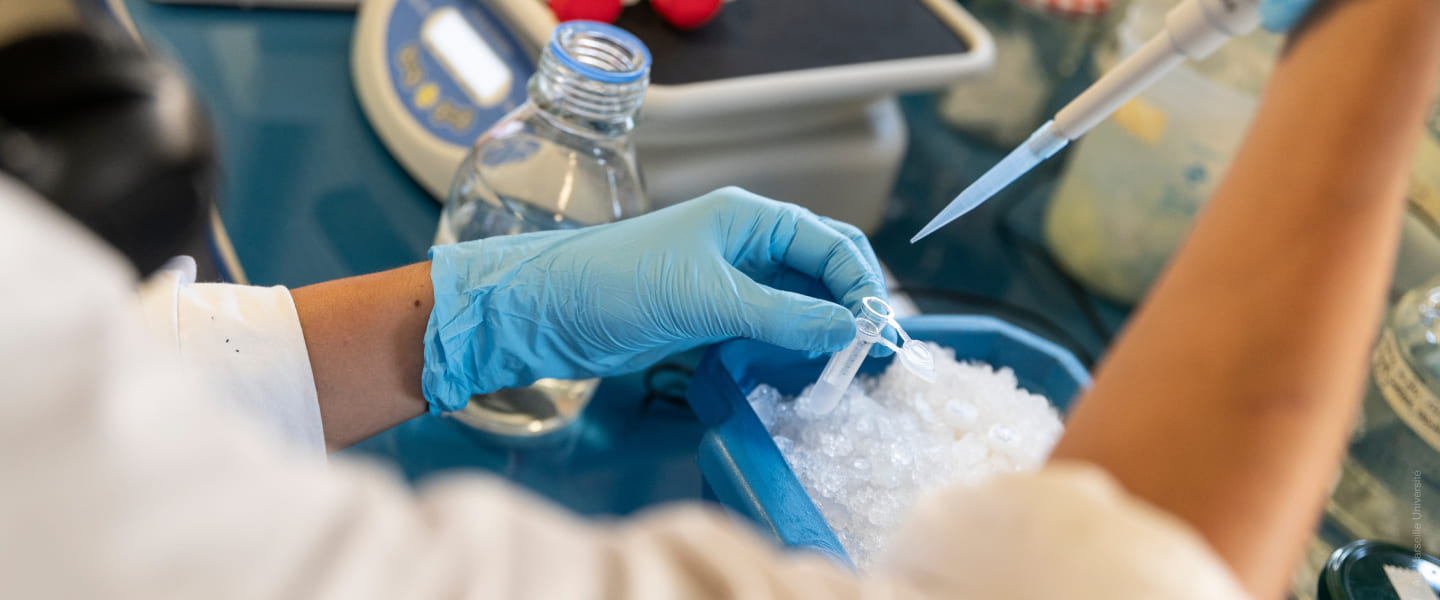
Marseille, April 14 2026 – Interview with Rémi Lasserre, Inserm Researcher at CRCM Marseille.
At the Cancer Research Center of Marseille (CRCM), Inserm researcher Rémi Lasserre focuses on lymphocytes and how they can be engineered into powerful therapeutic tools. He is currently collaborating with the Cell-Scale platform, within MIB, to develop next-generation CAR-T cells designed to better target solid tumors.

To begin with, could you briefly introduce yourself and your research focus at CRCM?
My name is Rémi Lasserre, I am a researcher at Inserm working at the Cancer Research Center of Marseille in the team led by Dr Cham. My field of expertise is the immune system, and more specifically T lymphocytes and their use in therapeutic approaches. The overarching goal is to understand how these cells can be modified and reprogrammed to become effective tools against cancer.
What is the main objective of the CAR-T cell project you are currently developing with Cell-Scale?
We are developing a CAR-T cell project in collaboration with the Cell-Scale platform. The central objective is to improve the ability of CAR-T cells to recognize and eliminate tumor cells, especially in the context of solid tumors. We aim to design multispecific receptors that can either target several tumor markers or only activate when specific combinations of receptors are present on the tumor cell surface. This makes the attack both broader in scope and more precise, while limiting off-tumor effects.
Why is it so challenging to treat solid tumors with CAR-T cells today?
CAR-T cells already perform very well in certain hematological malignancies such as leukemias. In contrast, results in solid tumors have been much more modest. The tumor microenvironment is more complex, and the risk of irreversibly damaging healthy tissues is higher. One of the major bottlenecks today is to design CAR-T cells that are both sufficiently potent and highly specific for solid tumor cells.
What does the Cell-Scale platform concretely bring to your project in terms of capacity and expertise?
In an academic laboratory, our capacity is limited in terms of production volumes and the number of CAR-T variants we can test. The Cell-Scale platform has specialized engineers, all the required equipment and a fully established workflow for developing cell-based immunotherapies. They master the entire process of generating modified cells. In practice, this allows them to perform larger-scale screening, increase production capacity and test far more CAR-T designs than we could on our own. For us, it is a real lever that significantly expands our exploratory capabilities.
How does MIB change the way you approach translational research, especially with platforms like Cell-Scale?
MIB is designed to strengthen the ecosystem in immunology and immuno-oncology. It brings together fundamental research teams, technological platforms like Cell-Scale, startups, biotechs and hospital partners. For a researcher with a very fundamental background, it creates a framework to bridge basic questions about immune system function with the development of innovative therapies. Thanks to this structure and dedicated funding schemes, the transition from laboratory concepts to translational projects becomes much more realistic.
You are working on multispecific receptors and logical activation, based on nanobody technology. How would you explain this in simple terms?
A useful analogy comes from computer science and logic. We can design receptors that activate a cell if a tumor cell expresses receptor “A” or receptor “B”, which broadens the recognition spectrum. But we can also engineer designs where the cells only activate if both “A” and “B” are present at the same time. In that case, targeting becomes much more specific. This logical gating allows us to fine-tune CAR-T cell behavior so that they attack the right cells, under the right conditions.
Why did you choose to work with nanobodies derived from llama antibodies?
We use nanobodies, which are small domains derived from llama antibodies. They are compact, stable and relatively easy to engineer. We can concatenate them, assembling them one after another to build tailor-made multispecific receptors. Once introduced into lymphocytes, these receptors allow the cells to recognize human tumor cells expressing the selected targets and to destroy them. This modularity gives us a lot of freedom to adjust affinity, spacing between domains or receptor flexibility.
Where does the project stand today, and what are the next key milestones?
The project is already up and running. We have hired a PhD student who is working on it and driving the design and initial validation of the receptors. We have now reached a pivotal stage where we are going to engage more deeply with the Cell-Scale platform to test a production method for CAR-T cells that will allow us to evaluate multiple receptors in parallel. The collaboration is therefore about to move into a very concrete phase, with larger-scale productions and more exhaustive testing.
What is your main target with Nanologic?
In the longer term, our main target is glioblastoma, a highly aggressive brain tumor with very limited effective treatment options. We are collaborating with clinician Emeline Tabouret, who treats these patients and also conducts research on this cancer. Our strategy is to first work on well-characterized targets such as EpCAM and EGFR, which are highly expressed in certain tumors, to understand how to design efficient multispecific receptors. Once we have built that know-how, we plan to transpose the technology to markers that are more specific to glioblastoma. Close interaction with clinicians is key to ensuring that our designs address real clinical needs.
Even roughly, what kind of timeline are we talking about before reaching the clinic?
Moving into the clinic is a very long and tightly regulated process. Before that, you need extremely robust protocols, well-rationalized preclinical studies and substantial financial resources. This is not something an academic lab can achieve alone. That is precisely why structures like the Biocluster, technological platforms and partnerships with industry or pharma are so critical: they make this transfer feasible, even if the realistic horizon is medium to long term.
What message would you like to send to academic teams that are still hesitating to get involved in cell therapy projects via such platforms?
For many immunology teams, cell therapy development can seem too heavy or too far from their day-to-day lab work. Platforms like Cell-Scale are precisely there to lower this barrier. They provide expertise, infrastructure and support to help turn ideas emerging from basic research into more translational projects. For us, it is a highly valuable tool and a genuine catalyst: it broadens what is possible and opens the door to innovative therapies that we would not have been able to develop on our own.
Actualités